

Everyone has two ledgers
Ledger 1 holds: what you can do, the skills, the reps, and the years it took to build.
Ledger 2 holds: how many people know that you can do it.
For a hundred years, the work did the talking. You kept your head down, did great work, built expertise, and before long the right people noticed. Most of us were raised on some version of that, and it wasn't wrong.
It worked for so long that almost nobody bothered to maintain the second ledger at all. That world ended, and the one replacing it punishes people that did nothing wrong.
Good Work is the Entry Fee
Doing better work than your competition used to garner praise and help your reputation. But, now with the help of AI, the people who used to be considered average use tools to punch significantly above their weight class.
The clearest study I could find on what that means comes from a software company that gave an AI assistant to over 5,000 customer support reps. The least-skilled cohort (~1,000 individuals) resolved 36% more issues per hour, whereas the most-skilled cohort (~1,000 individuals) saw no significant change.
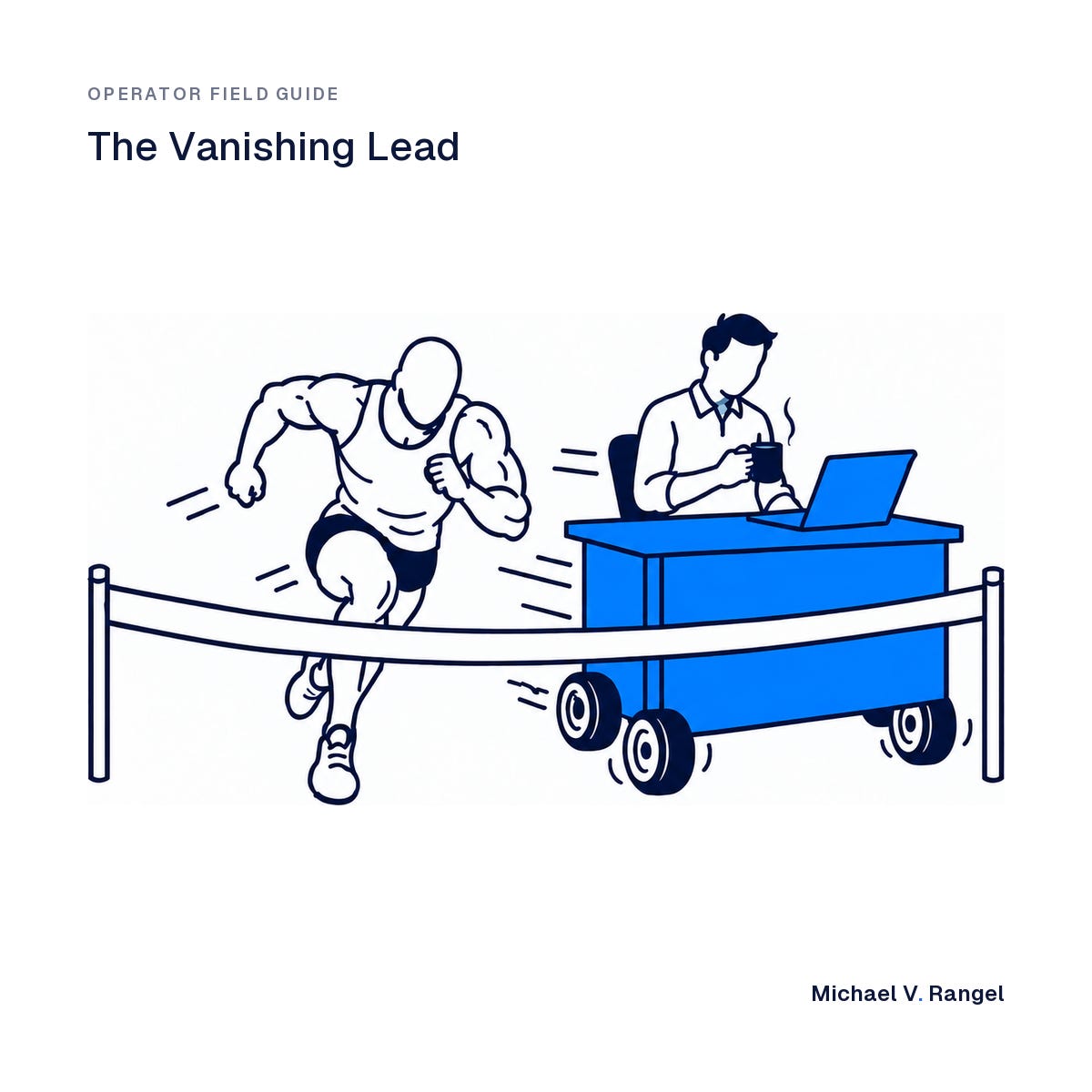
Read that again. The best people didn't get better. Everyone else got closer to them. But, that's one job at one company. Let's look at a different kind of work.
In a different online experiment, 453 professionals (marketers, consultants, grant writers, HR people and others) got short writing tasks. Half of them, picked at random, were shown ChatGPT and told they could use it. That half finished 40% faster, and their work was graded 18% better, and the authors reported that inequality between workers decreased. These are people who sell their thinking for a living, and the same thing happened to them.
The direction is hard to miss. Good skills used to set you apart. Now a whole class of people who were previously considered average have tools that bring their output close to yours. Your skills didn't get worse; they got commoditized.
Good work still matters, but not in the way that it used to. In this new game, it pays your entry fee, but no longer provides the competitive advantage. So, now that you're in the game, what are you going to do about it? How do you win?
Visibility is Capital
As Ledger 1 has quietly dropped in value, Ledger 2 has compounded, while no one sent out a memo saying the rules of the game were changing.
Historically, a resume proved competence. It was an instrument used as a proxy for credibility prior to you entering the room. But, its fatal flaw? It could never produce trust. And, in today's world, trust has become the silver bullet to pierce through the noise. How do you build trust?
Investing in Ledger 2.
So, what goes into it? Proof. Receipts. Stories. Projects you published, interviews you recorded, things you put your name on and stood behind. Ledger 2 grows every time your words end up somewhere outside of your own head.
Let's bring it into a business context and see how it plays out in the numbers. In a recent study, a team of economists studied bars and restaurants in Texas, using the state's own tax records to track revenue. Roughly 18% of them weren't listed on Yelp. When a business got added, its revenue rose somewhere between 5% and 10% without doing anything different.
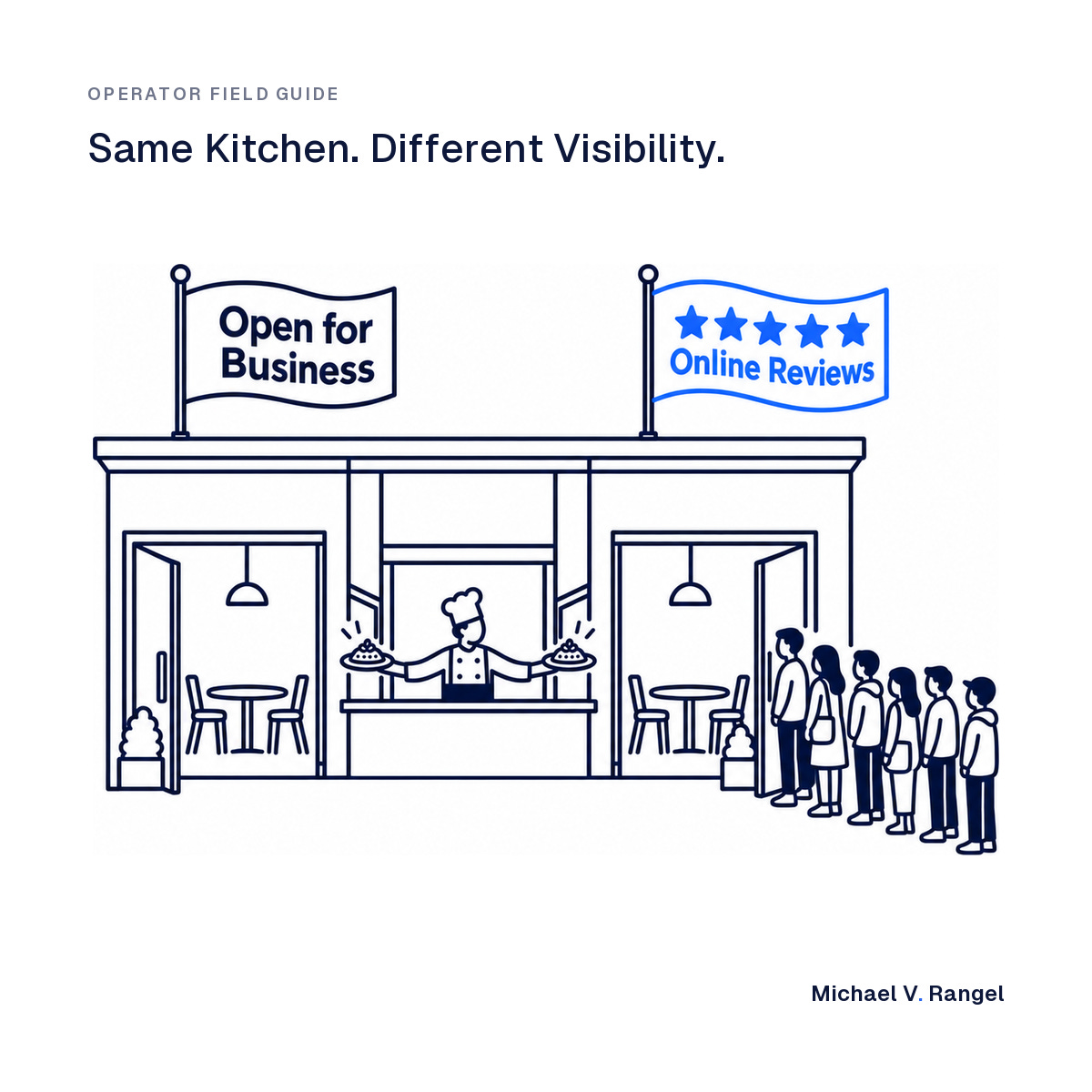
Same Ledger 1. Different Ledger 2.
Think about who reads Ledger 2. Anyone deciding to hire you for your services before the first call, before the first meeting, before they ever need what you sell. It doesn't matter if you're an employee, a freelancer, or a business owner with a team of twenty or a team of one. The entire world around you looks for Ledger 2 as a prerequisite to doing business.
If yours was empty, do you think that'd afford their trust? Or do you think they'd look for a different solution that did?
If you're anything like me, you went “all in” building Ledger 1 and thinking that your work would do the talking. Now that I'm on the other side of it - I can confidently say that was the most expensive mistake that I have ever made.
My Trophy Mantel
I founded Novo in 2016 and I ran it as CEO for the first nine years. I raised over $170 million from venture capitalists (VCs) and built a team of more than 150 people across three continents. Our core banking product served over 250,000 small businesses spread across all fifty states.
Through it all, LinkedIn was another box to check after we got recognition. It was my trophy mantel that I could point to and make my parents proud!
Sure - that's how most people use it. You post when you earn the credential, land the job, hit the milestone, win the client. By default, I posted about our funding rounds, awards, and growth milestones.
“Look, Mom! I raised some money. Don't I deserve a gold star?”
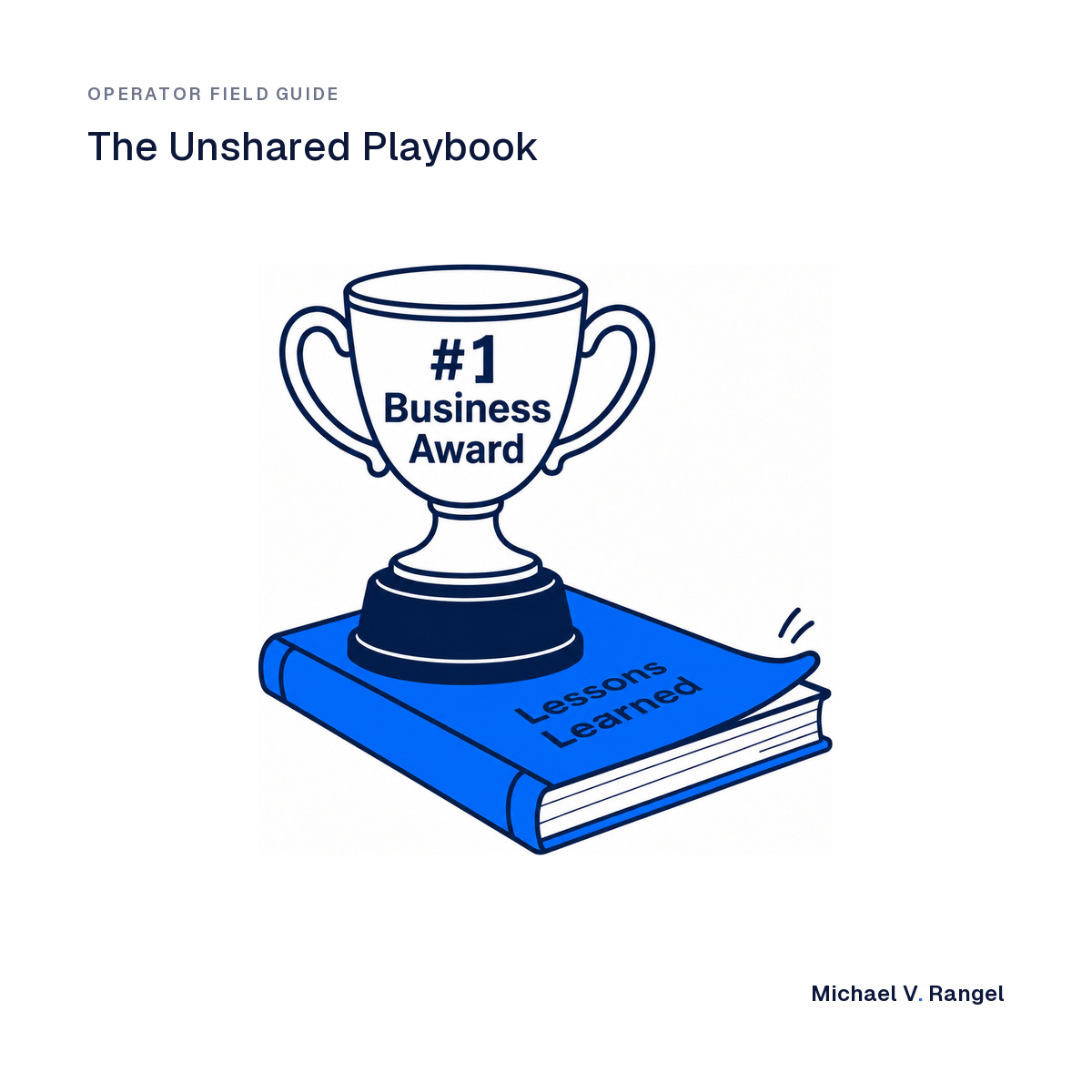
What I never posted about were the things that others would find more value in. Like the countless times that I failed throughout my journey. The decisions, the mistakes, the times I fell down and how I got back up. That was the part someone a few years behind me could have used, and I kept it all to myself.
I thought building a personal brand was a distraction from the real work. The company was the asset and it required 100% of my attention.
The strange part is that in the early days, I'd learn almost anything the job asked of me. I mean if I didn't do it - then who would? Strategy. The numbers. When we needed design, I picked up Illustrator. When something needed testing, I learned how to QA. I'd learn anything to further the business except how to build my own name.
Everything I put in went into the company's ledger. The learnings, the decisions, the mistakes, the opinions. All of it had Novo's name on it. None of it had mine.
"What Do You Do?”
After my daughter was born, my wife and I decided that I'd step back from day-to-day operations and we'd take a year sabbatical.
About six months into the sabbatical, the weight of the trade finally caught up with me. At first, it happened like a slow leak from the faucet. But, over time it became something that I couldn't stop thinking about. Someone would ask, “What do you do?” And every time, the only answer I had was “Novo.”
I pointed at a company. That was Ledger 1.
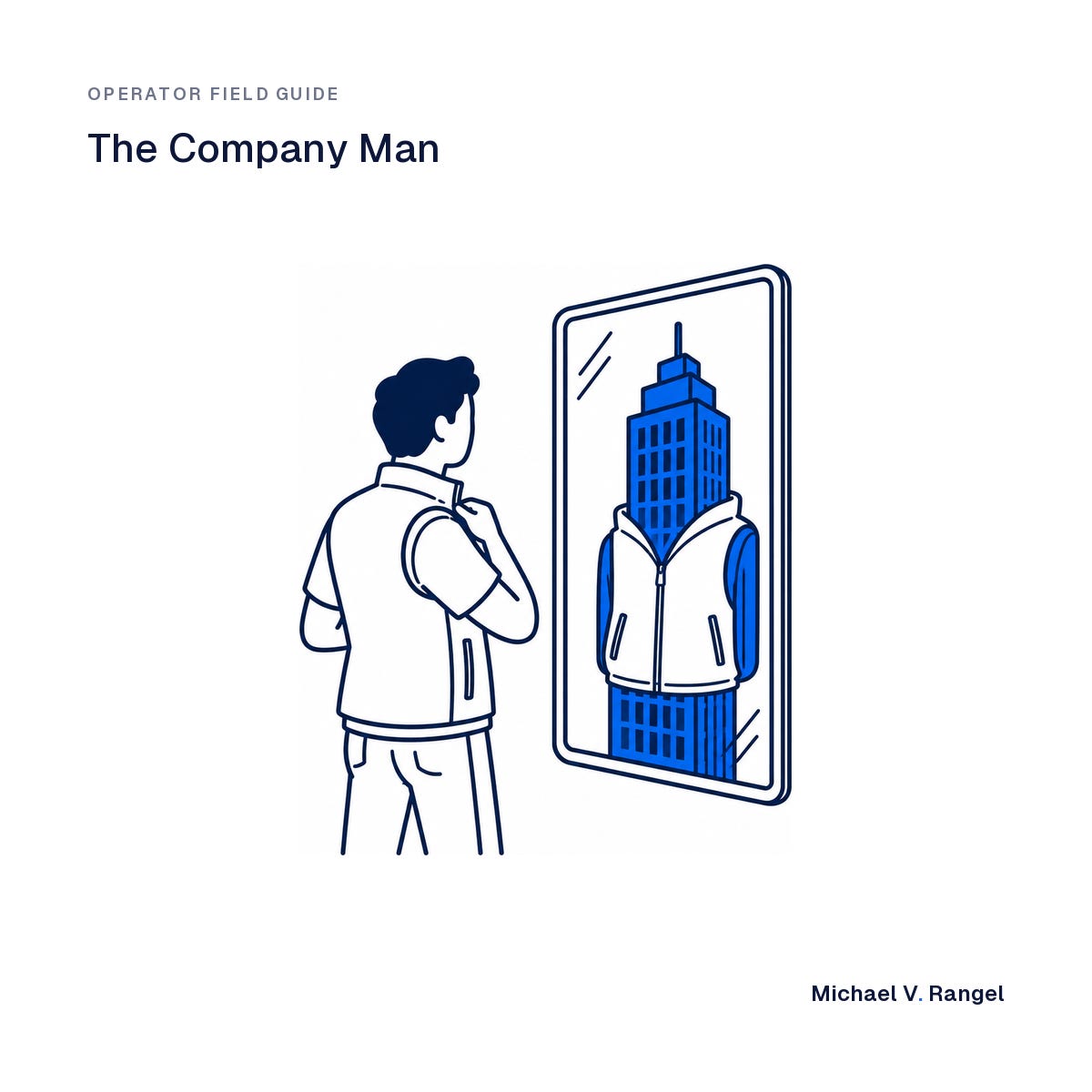
What I actually did during that time, how I thought, what I'd learned, what I stood for during tough times, all of that should have lived in Ledger 2, but there was nothing there for me to point at because I thought it was a distraction.
The thing I had actively decided against was the only thing that nobody could take away from me.
Finally contributing to Ledger 2
If I could speak to my younger self, I would physically force him to build his personal brand no matter how much of a “distraction” he thought it might be.
Not because the company mattered less. But because of the thousands of people that could have benefited from what I was learning along the way, and I kept all of it in a ledger with someone else's name on it.
Everyone has an audience they can't see yet. Even if that's just someone like your younger self, on a similar journey, trying to learn through the things you share about yours.
After running a company for almost a decade, I filled Ledger 1. The advice I grew up on that worked for a hundred years, I thought would have worked for me because I built my company from nothing. But, now I'm playing catch-up after missing 10 years of compounding growth.
I couldn't be more excited about getting back into the arena.
Partially because I think this is the best time in history for builders. But, also because I am on a mission to fix my Ledger 2 and it feels great to be a beginner again.
After not having invested in my personal brand, it feels like I'm starting from zero. Allowing my curiosity to steer has been a refreshing experience and has felt like the early days of Novo, except this time, the priority is Ledger 2.
Thankfully, my LinkedIn 'trophy-posting era' gave me 4,000 followers to work from, but it could have been 40,000+ if I had done it right the first time.
I'm starting my Ledger 2 now, in public. The learnings this time, not the trophies. Start building your Ledger 2 with me. Subscribe and follow along!